
Politics 101:
Equipping Youth to Understand and Shape Public Policy
In a context where social, economic, and environmental issues are becoming increasingly complex, it is essential to equip young people with the tools to understand how public decisions are made — and how they can take part in them. This is precisely the goal of the Politics 101 program, developed by Action Canada for Youth Engagement.
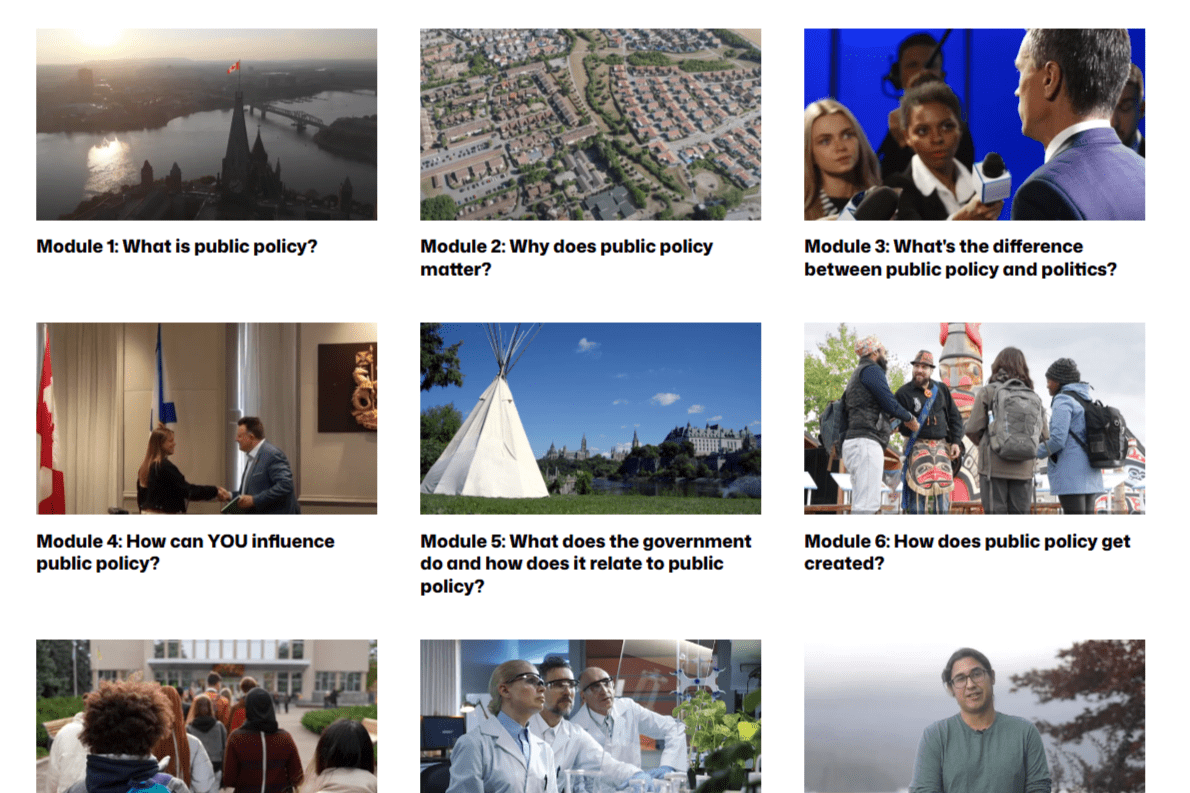
Politics 101 offers a clear, current, and engaging educational approach to public policy. Through dynamic videos and podcasts supported by teaching guides, the program makes concepts accessible that are often perceived as abstract or distant from students’ daily lives. Its aim is to plant the seeds for a future in which young people play an active role in shaping the policies that affect their lives.
Recently, a group of eight participants from SSENC was invited to contribute to the enhancement of the program. This 90-minute working session provided an opportunity to explore Phase 2 of Politics 101, presented by Sara-Christine Gemson, accompanied by Anne Matio, both from ppforum.
This second phase is built primarily around a series of case studies designed to help students better understand the relevance of public policy, as well as the processes involved in its development and implementation. These case studies immerse students in real or realistic situations where the concerns, values, and interests of various stakeholders may diverge — accurately reflecting the complexity of the political world.
As group members noted, this approach not only supports understanding of decision-making mechanisms, but also fosters the development of essential skills: critical thinking, dialogue, empathy, perspective-taking, and the ability to justify a position. Students do not simply learn what public policy is; they are encouraged to reflect on why it exists, how it is constructed, and what effects it may have on different groups.
The case studies are supported by clear and relevant explanatory videos that contextualize the issues addressed and enhance student understanding. A teaching guide also accompanies the materials, offering facilitation strategies, assessment tools, and reflective questions.
The exchanges were rich, and the constructive feedback provided by RESSC participants focused in particular on clarity of language, relevance of the approach, and opportunities for enhancement. It was also noted that the pedagogical activities align well with school curricula across different regions of the country. Notably, all materials are bilingual, and when a video’s narration is in one language, it is subtitled in the other. These discussions helped confirm the program’s educational relevance and refine certain aspects of its classroom implementation.
Politics 101 also stands out for its ability to connect with young people where they are — in their daily realities, concerns, questions, and aspirations. By offering current content rooted in concrete issues, the program promotes civic engagement not through indoctrination, but through understanding, discussion, and critical reflection.
For educators, this program represents a valuable tool for addressing citizenship, democracy, and political participation in a structured, accessible, and engaging way. It aligns fully with an educational approach that values critical thinking, deliberation, and social responsibility.
We warmly invite readers to visit Action Canada’s website to learn more about Politics 101, explore the available modules, and discover the associated teaching resources:
In a world undergoing constant change, helping young people understand how public decisions are made — and how they can contribute to them — is not merely an educational objective: it is a fundamental democratic issue.

