
AQEUS conference
In early December, the Quebec Association for Social Studies Education (AQEUS) held its annual conference in Rivière-du-Loup. The event brought together nearly 200 participants in person, with about ten more joining online. In an educational context marked by numerous organizational and budgetary challenges, this gathering nevertheless allowed the social studies community to come together, exchange ideas, and reflect collectively on teaching practices.
Offering a rich and diverse program, the conference provided participants with some 40 workshops and activities, presented in a blended format, addressing both the didactic and pedagogical issues specific to the teaching of history, geography, contemporary world studies, and financial education. The discussions allowed practical experience and fieldwork to echo the latest research, while also giving pride of place to informal sharing and networking among colleagues from different backgrounds.
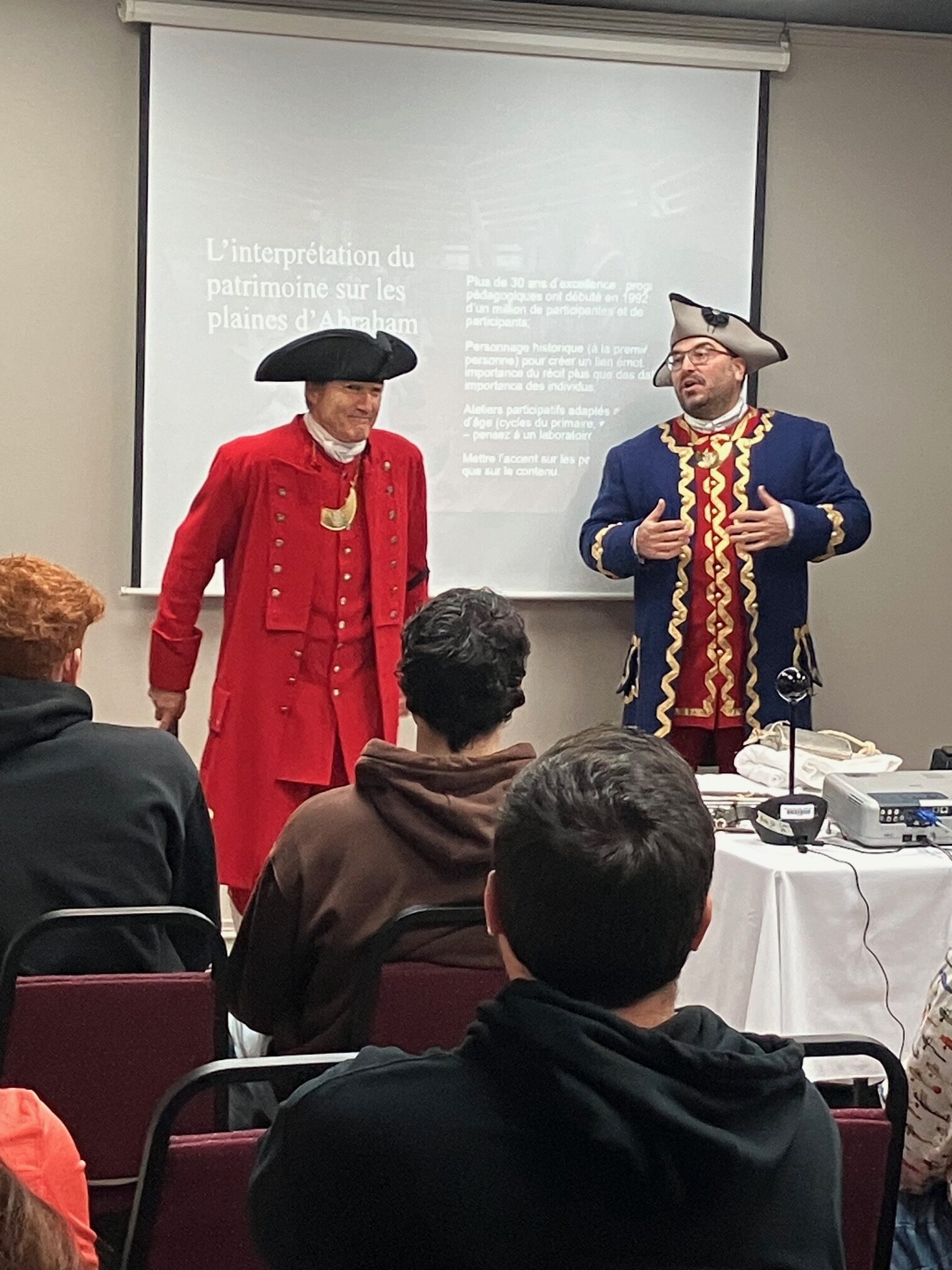
Other highlights of the event included educational field trips, which provided an opportunity to discover the Rivière-du-Loup region and its surroundings from a historical and geographical perspective. These outings served as a concrete reminder of the importance of the environment, landscape, and heritage as drivers of learning in the social sciences, in addition to fueling reflection on ways to further anchor teaching in contexts that are meaningful to students.
The keynote speeches gave the conference a special flavour. Ethnologist Isabelle Picard offered a sensitive and enlightening reflection on First Peoples, memory, and transmission, inviting the education community to continue working toward understanding and recognition with a view to living together. Thomas Hellman gave a presentation that interwove storytelling, speech, and song, powerfully illustrating the possible links between culture, history, and education. These two presentations helped to give meaning to the conference theme by building bridges between knowledge, experiences, and cultural horizons.
Despite the quality of the program and the obvious interest of participants, attendance did not reach the expected level, mainly due to budgetary decisions made by certain school boards. This reality highlights the importance of maintaining access to continuing education and professional development opportunities, which are essential to updating practices and ensuring the vitality of the social sciences field.
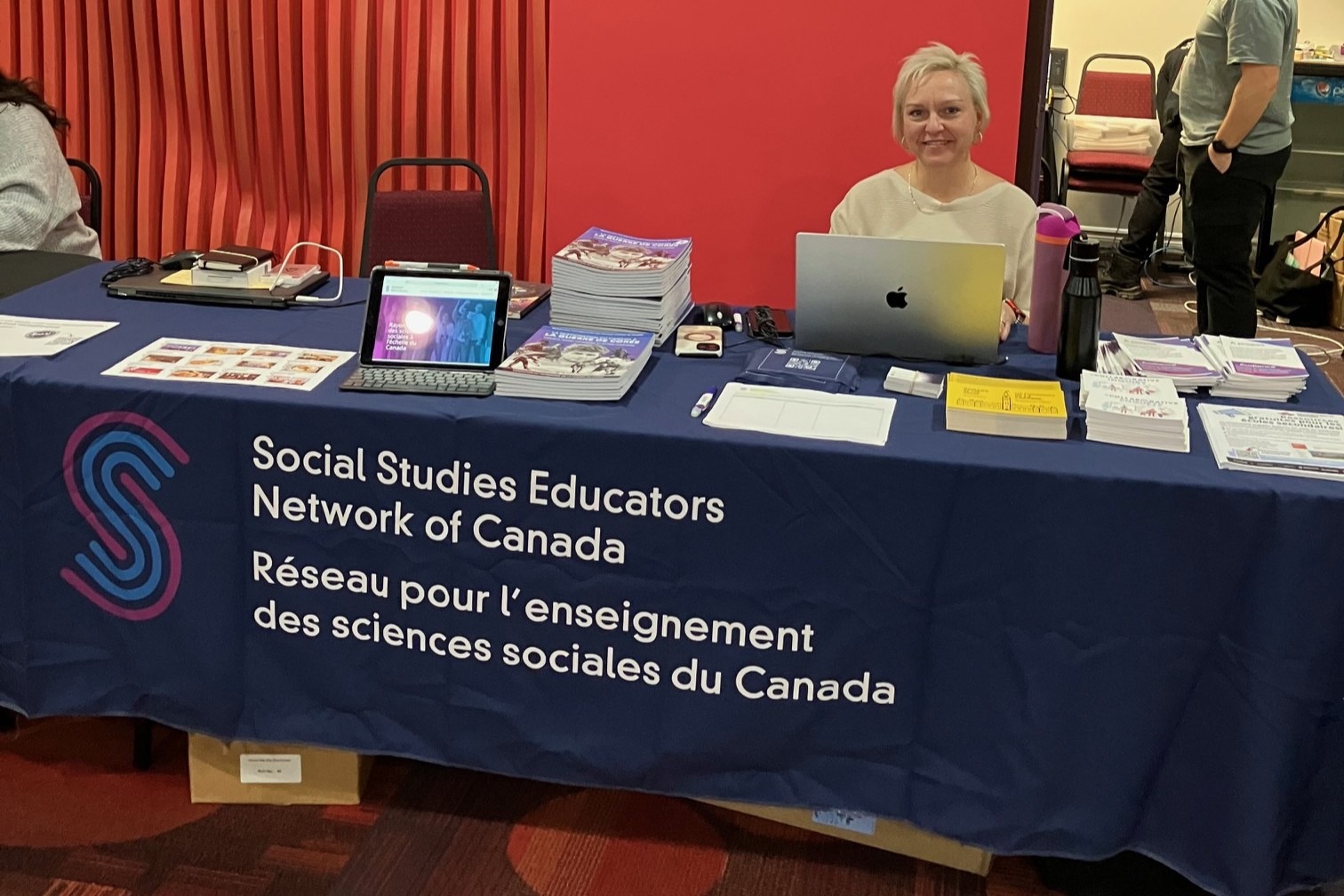
The Social Studies Educators Network of Canada (SSENC) was also present at the conference to raise awareness, exchange ideas with AQEUS members, and share resources from partners. This presence helped strengthen ties between Quebec stakeholders and the Canadian network, with a view to collaboration and sharing expertise.
Finally, it should be noted that the 2026 event will be held in Sherbrooke on October 22 and 23.

