
A New Resource for Social Studies Teachers: Inquiry, Agency, and Korean Women’s History
Diane Vautour
Increasingly, teachers are asked to develop lesson plans and resources that engage students in critical thinking, analysing multiple perspectives, encourage student voice and inquiry and are culturally responsive. A newly released resource from SSENC does exactly that. We are excited to share with you ‘Korean Women: A Historical Inquiry’, a collaboration between SSENC and the Academy of Korean Studies. This inquiry-driven learning experience, available in French and English, introduces students to the rich feminist history of Korea through its key inquiry question: In Korean History, were women subjects or actors?
The resource is structured around supporting questions, formative tasks and a final culminating task. Students move through three key time periods – Joseon Korea, the early 20th century, and contemporary Korea – as they analyze a pretty terrific collection of primary sources. Some highlights include:
- Personal memoirs like those of Lady Hyegyŏng
- Philosophical writings challenging gender norms
- Historical photographs and artwork
- Protest songs and magazine covers
- Contemporary voices and movements
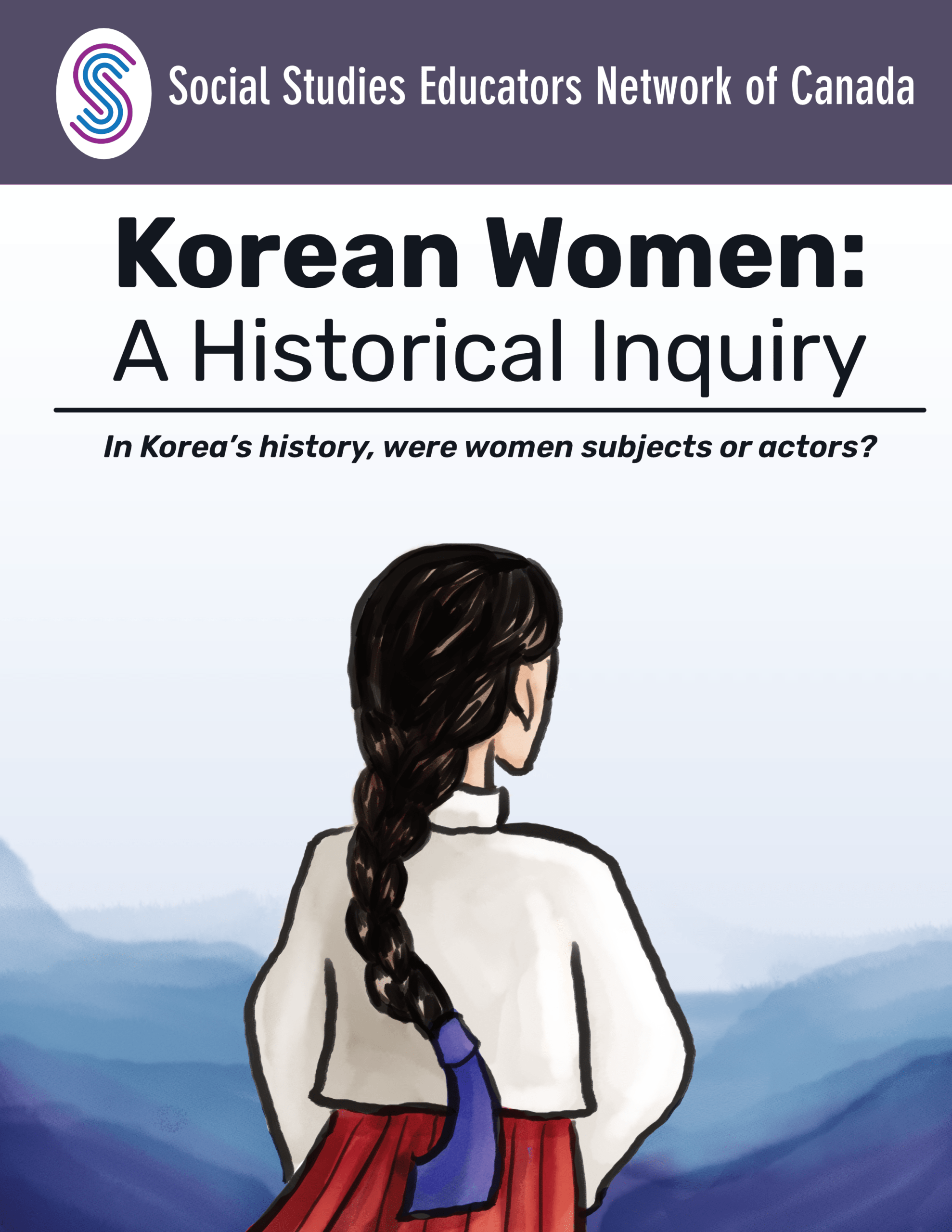
We intentionally varied the sources, including many access points for students through text, visuals and multimedia. To support all learners, we have included a glossary and built-in scaffolding as well as flexible lesson structures such as learning stations, small and large group discussions, collaborative work, graphic organizers and many opportunities for oral, visual and written expression. Students can engage with the material through such tasks as:
- Writing a bio poem
- Mapping forces on a visualization grid
- Participating in debate or gallery walks
And while we are obviously fans of Social Studies and History, this resource naturally extends into multiple disciplines:
- English / Language Arts: narrative voice, argument writing, textual analysis
- Equity & Social Justice: gender, power, agency, and representation
- Geography / Global Studies: understanding place, culture, and global connections
- Civics: activism, voice, and informed action
We are also proud that this inquiry doesn’t stop at just studying the past. Students are invited to reflect on their own lives as “subjects” or “actors”, interview women in their communities and make connections between historical and contemporary struggles. These activities can also inspire or support teachers looking for resources for such events as Asian Canadian Heritage Month or International Women’s Day. We are hoping that when students start asking, “Were they subjects or actors?”, they inevitably begin asking: “What about us?” You can find a downloadable PDF here.

