
Deepening the Dialogue:
A Teacher Discussion Guide for Valley of the Birdtail
Shelley Kirkvold
In this guide, we use “book club” and “book study” somewhat interchangeably. Both refer to educators coming together around a shared text for dialogue and reflection, though book club highlights conversation and community, while “book study” emphasizes structured learning and professional development goals.
This guide encourages educators to use Valley of the Birdtail as a meaningful opportunity to explore the connected histories of the communities of Rossburn and Waywayseecappo, examining themes of racism, resilience, and reconciliation. Through dialogue and reflection, readers are invited to confront difficult truths, deepen cultural understanding,and strengthen their practices as compassionate, inclusive educators.
Rooted in Honourable Justice Murray Sinclair’s reminder that reconciliation requires commitment, the guide promotes thoughtful discussion and growth toward creating classrooms grounded in truth, empathy, and mutual respect.
Engaging dialogically with Valley of the Birdtail through a book club facilitates shared inquiry, we are challenged to examine not only historical injustices but also our own beliefs and the roles we play in the ongoing work of reconciliation in education.
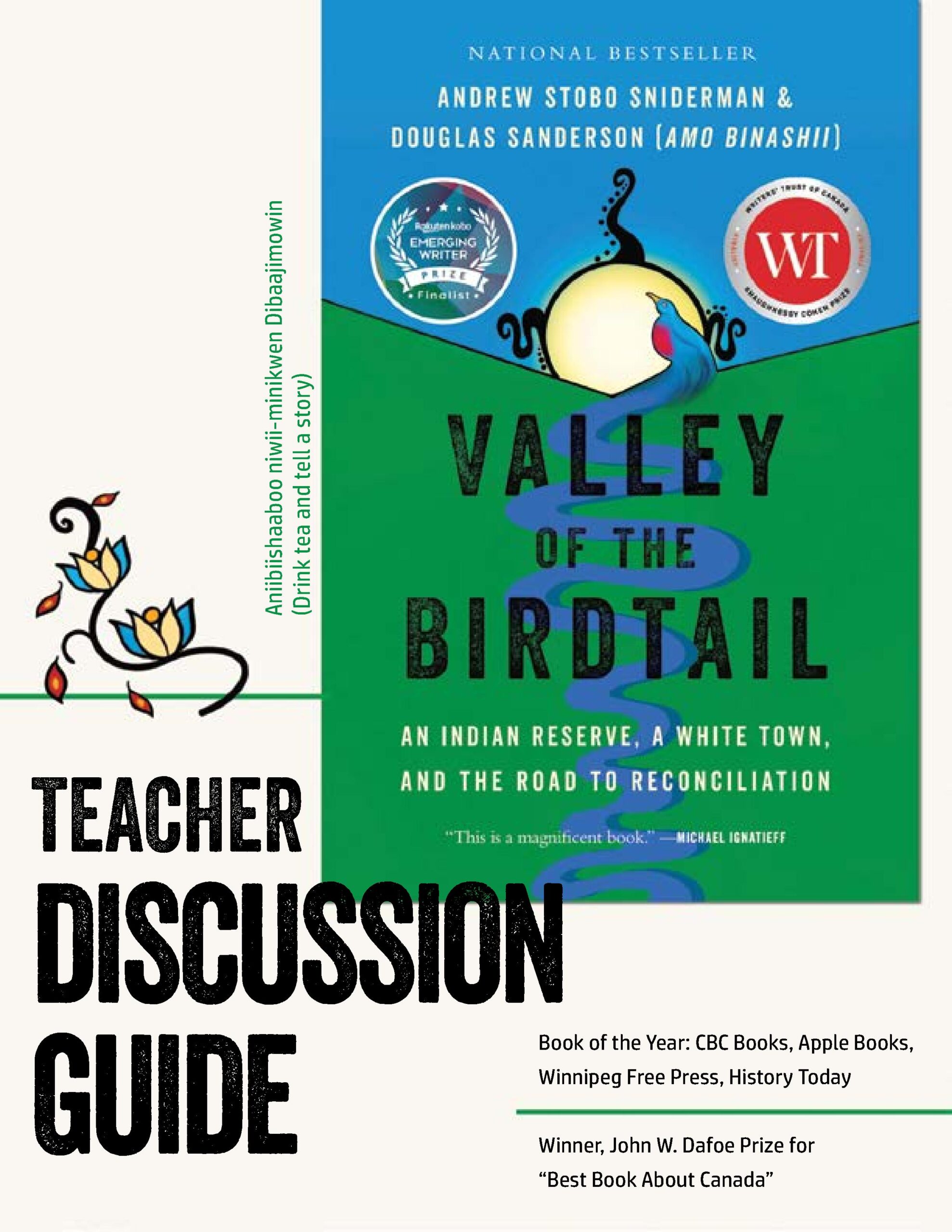
Meaningful understanding takes time and commitment, a lesson that resonates deeply withthe journey we encounter in Valley of the Birdtail. The narrative journey offered by AndrewStobo Sniderman and Douglas Sanderson (Amo Binashii) invites us to listen deeply, think critically, and reflect honestly. Through stories of struggle, courage, and transformation, the authors prompt readers to confront uncomfortable truths and seek understanding across cultural divides. Discussions provoked by the study of this book will centre on hard questions about justice, inequality, and community, while also carrying a spirit of compassion and hope for shared healing.
We encourage everyone to embrace this book club as one for open dialogue, respectful listening, and collaborative learning. The themes we explore are complex and, at times, painful. Let us meet them with empathy and humility, honoring both the living and ancestral voices whose stories shape this valley and our country.
Ultimately, this experience of engaging in a book study for Valley of the Birdtail is about growth, not only deepening our knowledge of history and reconciliation, but also strengthening our capacity to be better teachers,educators who respond to our students with greater understanding, cultural awareness, and compassion. By reflecting on these stories, we can nurture classrooms that are more inclusive, affirming, and driven by a shared sense of justice and belonging. Though this guide is mostly intended for teacher professional development, many of the themes and learning strategies could also be used with students in high school classrooms. Later on in the document we suggest curriculum connections across the country.
Thank you for your willingness to be vulnerable and your dedication to learning and moving forward in the spirit of truth and reconciliation. To support this work, we have created a resource page, which you will find at the end of the guide. We look forward to the meaningful conversations and insights that will help us learn, grow, and better support every student in our care.

